
Grand Egyptian Museum: Complete Guide to Egypt’s GEM 2026.
Introduction to the Grand Egyptian Museum
The Grand Egyptian Museum is one of the most important cultural attractions in Egypt and a must-visit destination for anyone interested in ancient Egyptian history, archaeology, and the civilization of the pharaohs. Located in Giza, approximately 2 kilometers from the Giza Pyramid Complex, the Grand Egyptian Museum offers an extraordinary opportunity to discover thousands of years of history through an extensive collection of ancient Egyptian artifacts.
Grand Egyptian Museum: Complete Guide to Egypt’s Most Incredible Ancient Egyptian Treasures.
The Grand Egyptian Museum in Giza, Egypt, is dedicated to preserving and presenting the remarkable achievements of ancient Egyptian civilization. With a collection of more than 100,000 artifacts, the museum showcases objects from prehistoric Egypt through the Greco-Roman period. Its impressive architecture, extensive exhibition galleries, and advanced conservation facilities make the Grand Egyptian Museum one of the world’s most significant archaeological institutions.
One of the main highlights of the Grand Egyptian Museum is the complete collection of King Tutankhamun, featuring 5,398 artifacts displayed together in dedicated exhibition halls. Visitors can also explore monumental statues, royal treasures, ancient funerary objects, and the solar boats associated with King Khufu.
For travelers planning a trip to Egypt, the Grand Egyptian Museum is an essential destination that complements a visit to the Great Pyramids of Giza. Whether you are interested in ancient history, cultural tourism, Egyptian archaeology, or guided sightseeing experiences, the Grand Egyptian Museum provides a fascinating introduction to the history and heritage of Egypt.Grand Egyptian Museum: Complete Guide to Egypt’s Most Incredible Ancient Egyptian Treasures.Grand Egyptian Museum: Complete Guide to Egypt’s GEM 2026.
In this comprehensive Grand Egyptian Museum guide, you will discover the museum’s history, location, major collections, famous attractions, architectural design, and opportunities to combine a museum visit with the Giza Pyramids.Grand Egyptian Museum: Complete Guide to Egypt’s GEM 2026.
What Is the Grand Egyptian Museum?
The Grand Egyptian Museum, also known as GEM Egypt, is a major archaeological museum located in Giza near the world-famous Giza Pyramid Complex. The Grand Egyptian Museum was developed to preserve Egypt’s archaeological heritage while providing a modern environment for displaying ancient Egyptian treasures.
The museum houses more than 100,000 artifacts representing different periods of Egyptian history. Its collections include royal statues, religious objects, jewelry, furniture, funerary equipment, and everyday items that reveal how ancient Egyptians lived, worshipped, governed, and prepared for the afterlife.
The Grand Egyptian Museum is particularly famous for its Tutankhamun collection, which brings together 5,398 objects associated with the young pharaoh. Other important attractions include the monumental statue of Ramesses II, the Grand Staircase, the Khufu Ships Museum, and the main archaeological galleries.
Beyond its exhibitions, the Grand Egyptian Museum includes conservation laboratories, temporary exhibition halls, educational facilities, and spaces for cultural events. These facilities make it more than a traditional museum; it is a major center for archaeological preservation, education, and cultural tourism.Grand Egyptian Museum: Complete Guide to Egypt’s Most Incredible Ancient Egyptian Treasures.Grand Egyptian Museum: Complete Guide to Egypt’s GEM 2026.
For anyone researching the best museums in Egypt, the Grand Egyptian Museum deserves a prominent place because of its extensive collections, modern facilities, and proximity to the pyramids.
Where Is the Grand Egyptian Museum Located?
The Grand Egyptian Museum is located in Giza, Egypt, approximately 2 kilometers from the Giza Pyramid Complex. Its location makes the Grand Egyptian Museum an ideal attraction for visitors exploring Cairo, Giza, and the surrounding archaeological sites.
Travelers can combine the Grand Egyptian Museum with visits to the Great Pyramid of Khufu, the Pyramid of Khafre, the Pyramid of Menkaure, and the Great Sphinx. These attractions provide different perspectives on ancient Egyptian civilization, from the monumental architecture of the Old Kingdom to the royal artifacts preserved inside the museum.Grand Egyptian Museum: Complete Guide to Egypt’s GEM 2026.
The Grand Egyptian Museum is also a convenient addition to private Cairo tours, guided Giza excursions, and broader Egypt travel itineraries. Visitors staying in Cairo can organize transportation to Giza and explore the museum alongside other historical attractions.
For travelers who want to understand ancient Egypt beyond the pyramids, visiting the Grand Egyptian Museum provides valuable historical context for the monuments and archaeological discoveries found throughout the country.
History of the Grand Egyptian Museum
The history of the Grand Egyptian Museum began in the early 1990s, when Egypt introduced plans to establish a modern museum capable of displaying and preserving a much larger collection of ancient Egyptian artifacts.Grand Egyptian Museum: Complete Guide to Egypt’s GEM 2026.
The concept was promoted by Farouk Hosni, Egypt’s Minister of Culture from 1987 to 2011. At the time, the Egyptian Museum in Tahrir Square faced limitations related to its age, exhibition space, and the growing need for improved artifact conservation.Grand Egyptian Museum: Complete Guide to Egypt’s Most Incredible Ancient Egyptian Treasures.
In 1992, the Egyptian government officially launched the Grand Egyptian Museum project under President Hosni Mubarak. The project aimed to create a modern cultural institution that could accommodate important archaeological collections while supporting research, education, preservation, and tourism.
The foundation stone was laid in 2002, and construction began in 2005. The project involved Egyptian and international companies, including Orascom Construction and BelgiGrandum’s BESIX Group. Egyptian Museum: Complete Guide to Egypt’s GEM 2026.
The construction and preparation of the Grand Egyptian Museum took many years. Its opening was postponed several times because of the COVID-19 pandemic, construction requirements, logistical challenges, and the complex process of transferring and preparing archaeological objects.Grand Egyptian Museum: Complete Guide to Egypt’s Most Incredible Ancient Egyptian Treasures.
Trial operations began in October 2024, allowing visitors to access selected areas before the museum’s full inauguration.
The Grand Egyptian Museum officially opened on November 1, 2025, marking an important milestone in Egypt’s cultural and archaeological development.
Today, the Grand Egyptian Museum represents a major investment in preserving Egypt’s history and presenting ancient Egyptian civilization to visitors from around the world.
Why Is the Grand Egyptian Museum Important?
The Grand Egyptian Museum is important because it brings together an extensive archaeological collection, modern exhibition spaces, scientific conservation facilities, and educational resources within one cultural complex.
With more than 100,000 artifacts in its collection, the Grand Egyptian Museum presents a broad overview of Egyptian civilization across thousands of years. Its exhibitions explore the development of early communities, the rise of the pharaohs, religious traditions, royal burial practices, artistic achievements, and changes in Egyptian society.Grand Egyptian Museum: Complete Guide to Egypt’s GEM 2026.
The museum also provides improved opportunities to display artifacts that were previously held in storage or exhibited in different museums across Egypt. Bringing important objects together allows visitors to understand historical connections between royal collections, religious beliefs, artistic techniques, and everyday life.Grand Egyptian Museum: Complete Guide to Egypt’s Most Incredible Ancient Egyptian Treasures.
Another important feature of the Grand Egyptian Museum is its conservation center, where specialists use scientific methods to study, restore, and protect archaeological objects. Egyptian Museum: Complete Guide to Egypt’s GEM 2026.
By combining exhibitions, conservation, research, and education, the Grand Egyptian Museum serves as both a major tourist attraction and an important institution dedicated to preserving Egypt’s cultural heritage.
Grand Egyptian Museum Collections and Exhibitions
The Grand Egyptian Museum houses more than 100,000 artifacts representing different periods of Egyptian history. Its 12 main permanent exhibition galleries display more than 24,000 objects arranged chronologically to explain the development of ancient Egyptian civilization.Egyptian Museum: Complete Guide to Egypt’s GEM 2026.
The Grand Egyptian Museum collections include statues, royal possessions, funerary objects, jewelry, furniture, religious artifacts, and archaeological discoveries that reveal how ancient Egyptians lived and understood their world.
Many artifacts were transferred from museums, archaeological sites, and storage facilities across Egypt, including Cairo, Luxor, Minya, Sohag, Assiut, Beni Suef, Fayoum, theEgyptian Museum: Complete Guide to Egypt’s GEM 2026. Nile Delta, and Alexandria.
The galleries cover different historical periods, allowing visitors to follow the development of Egyptian society from its earliest stages through the Greco-Roman era.
The Grand Hall of the Grand Egyptian Museum
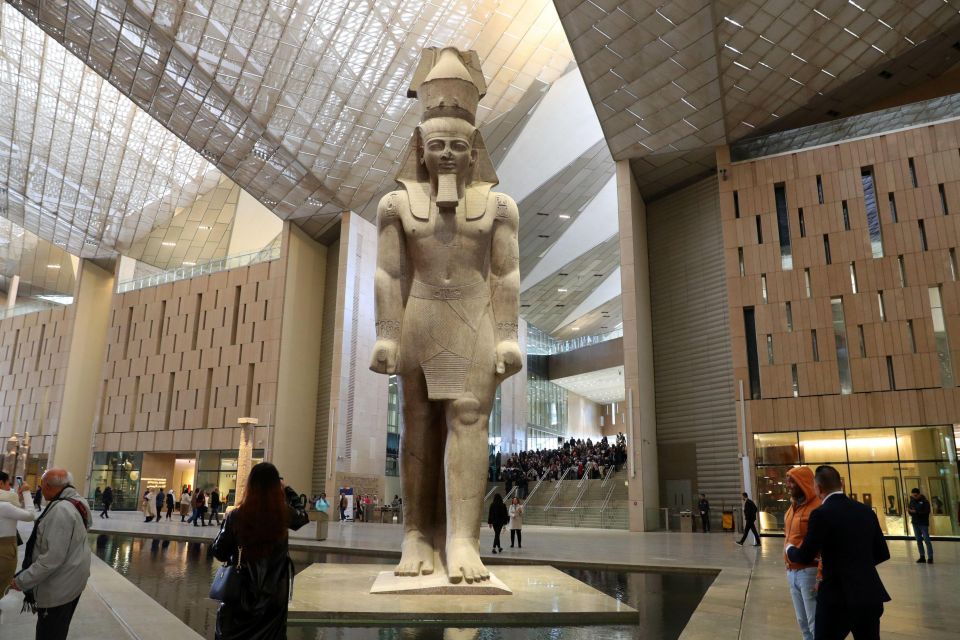
The Grand Hall, also known as the Atrium, is the main entrance space of the Grand Egyptian Museum. Covering approximately 10,000 square meters, the hall introduces visitors to the scale and historical importance of the museum’s collections.
One of the most recognizable attractions in the Grand Hall is the monumental statue of Pharaoh Ramesses II. Standing approximately 11 meters tall and weighing around 83 tons, the statue demonstrates the artistic skill and monumental ambition of ancient Egyptian civilization.Grand Egyptian Museum: Complete Guide to Egypt’s GEM 2026.
The statue was transferred from Ramses Square in Cairo to the Grand Egyptian Museum in 2006 and placed in the Grand Hall in 2018.
The Atrium also displays large archaeological objects from different periods of Egyptian history. Its glass roof and transparent facade allow natural light into the space, while views toward the Giza Pyramids connect the museum’s modern architecture with the ancient monuments nGrand Egyptian Museum: Complete Guide to Egypt’s Most Incredible Ancient Egyptian Treasures.earby.
For visitors entering the Grand Egyptian Museum, the Grand Hall provides an impressive introduction to the royal statues, monumental art, and historical collections found throughout the building.
The Grand Staircase
The Grand Staircase is another major highlight of the Grand Egyptian Museum. Extending across approximately 6,000 square meters and rising around 50 meters, this six-story structure connects the main entrance with the upper exhibition areas.
The staircase displays more than 60 archaeological objects, including royal statues, religious sculptures, and funerary monuments. Its thematic sections explore the relationship between kingship, religion, and burial traditions in ancient Egypt.
The main themes include:
Royal Image: Explores how pharaohs represented their power and authority through royal statues and imagery.
Divine Houses: Examines temples, religious practices, and the relationship between rulers and the gods.
Gods and Kings: Presents ancient Egyptian deities and their connections with royal authority.
Funerary Section: Displays stone coffins, sarcophagi, and objects associated with ancient Egyptian burial customs.
The Grand Staircase is more than a passage between floors. It introduces visitors to the beliefs, artistic traditions, and royal symbolism that shaped ancient Egyptian civilization.
Its upper levels also provide views toward the Giza Pyramids, connecting the archaeological objects inside the Grand Egyptian Museum with the monuments on the nearby plateau.
The Main Galleries of the Grand Egyptian Museum
The 12 main galleries form the heart of the Grand Egyptian Museum’s permanent exhibition. Together, they display more than 24,000 artifacts arranged according to historical periods.
The galleries explore ancient Egyptian society, kingship, and religious beliefs, helping visitors understand how Egyptian civilization developed across thousands of years.
Galleries 1–3: Early Egyptian Civilization
These galleries cover prehistoric Egypt, the Predynastic Period, the Early Dynastic Period, the Old Kingdom, and the First Intermediate Period. Visitors can explore the emergence of organized communities, the development of early political institutions, and the rise of the pharaonic state.Grand Egyptian Museum: Complete Guide to Egypt’s GEM 2026.
The Old Kingdom is particularly important for understanding the development of pyramid construction and royal burial traditions.
Galleries 4–6: The Middle Kingdom and Second Intermediate Period
These galleries examine political changes, artistic developments, religious traditions, and royal authority during the Middle Kingdom and Second Intermediate Period.Grand Egyptian Museum: Complete Guide to Egypt’s Most Incredible Ancient Egyptian Treasures.
The artifacts provide insight into the changing structure of Egyptian society and the continuation of important cultural traditions.
Galleries 7–9: The New Kingdom
The New Kingdom was one of the most influential periods in ancient Egyptian history. It was associated with powerful pharaohs, major temple projects, international connections, and remarkable artistic achievements.
The Grand Egyptian Museum presents artifacts that illustrate royal life, religious practices, and the cultural influence of this period.
Galleries 10–12: Later Egyptian History
The final galleries cover the Third Intermediate Period, the Late Period, and the Greco-Roman periods. They explore how Egyptian civilization responded to political changes and interactions with other cultures.
Together, the main galleries of the Grand Egyptian Museum provide a comprehensive introduction to ancient Egyptian history.
The Tutankhamun Collection at the Grand Egyptian Museum
The Tutankhamun collection is one of the most important attractions at the Grand Egyptian Museum. Two dedicated exhibition halls display 5,398 artifacts associated with the young pharaoh of the Eighteenth Dynasty, who ruled approximately between 1332 and 1323 BCE.
The collection brings together objects that were previously displayed across different spaces, particularly at the Egyptian Museum in Tahrir Square. Visitors can now explore an extensive group of Tutankhamun’s treasures in one location.
The Tutankhamun galleries cover approximately 7,000 square meters and contain objects that reveal the king’s royal status, burial practices, personal possessions, and beliefs about the afterlife.
The Golden Mask of Tutankhamun
The Golden Mask of Tutankhamun is one of the most famous archaeological objects associated with ancient Egypt. It is a major highlight of the Grand Egyptian Museum’s Tutankhamun collection.
Created from gold and decorated with detailed features and precious materials, the mask reflects the exceptional craftsmanship of ancient Egyptian royal workshops. Its striped headdress and royal symbols represent the king’s identity and status.Grand Egyptian Museum: Complete Guide to Egypt’s Most Incredible Ancient Egyptian Treasures.
The mask is particularly significant because it connects visitors with the burial traditions and religious beliefs of ancient Egypt.Grand Egyptian Museum: Complete Guide to Egypt’s GEM 2026.
The Golden Coffins and Sarcophagus
The Tutankhamun collection includes three nested coffins, one made of solid gold and two made of gold-plated wood. The innermost gold coffin weighs approximately 110 kilograms and demonstrates the extraordinary skills of ancient Egyptian metalworkers.
The collection also includes the king’s sarcophagus and other objects associated with his burial.
These artifacts reveal the complexity of royal funerary practices and the resources devoted to preparing a pharaoh for the afterlife.
The Golden Throne of Tutankhamun
The Golden Throne of Tutankhamun is another significant object displayed as part of the king’s collection. Decorated with gold and silver, the throne features scenes depicting Tutankhamun and his wife, Ankhesenamun.
Its detailed artwork provides insight into royal life, artistic techniques, and the ways ancient Egyptian rulers represented themselves and their families.
Jewelry, Furniture, and Everyday Objects
The Grand Egyptian Museum’s Tutankhamun collection also includes necklaces, rings, amulets, weapons, beds, chairs, dining utensils, and other objects associated with the king’s life and burial.
Ushabti figures, small funerary statuettes intended to serve the deceased in the afterlife according to ancient Egyptian beliefs, are another important part of the collection.Grand Egyptian Museum: Complete Guide to Egypt’s Most Incredible Ancient Egyptian Treasures.
These objects provide evidence of ancient Egyptian craftsmanship and material culture, revealing details that cannot be understood through monumental architecture alone.Grand Egyptian Museum: Complete Guide to Egypt’s GEM 2026.
It is important to note that Tutankhamun’s mummy remains in his tomb in the Valley of the Kings in Luxor. The Grand Egyptian Museum displays his extensive collection of burial treasures rather than his mummy.
For travelers interested in ancient Egyptian archaeology, the Tutankhamun galleries are among the most compelling reasons to visit the Grand Egyptian Museum.
The Khufu Ships Museum
The Khufu Ships Museum is another important attraction within the Grand Egyptian Museum complex. It is dedicated to the solar boats associated with King Khufu, the pharaoh responsible for the construction of the Great Pyramid of Giza.
These wooden vessels date back approximately 4,600 years and provide valuable evidence of ancient Egyptian shipbuilding, woodworking, religious beliefs, and royal funerary traditions.
The exact purpose of the boats remains open to interpretation. They may have been associated with the king’s burial rituals, his journey into the afterlife, or symbolic voyages connected with the sun god Ra.
The collection was transferred from the former Giza Solar Boat Museum in August 2021.
By displaying these ancient vessels, the Grand Egyptian Museum expands visitors’ understanding of Egyptian civilization beyond pyramids, temples, and royal statues.
Architecture and Design of the Grand Egyptian Museum
The architecture of the Grand Egyptian Museum is one of its defining characteristics. The building was selected through an international architectural competition announced in January 2002, which attracted 1,557 entries from 82 countries.
The winning design was submitted by architects Róisín Heneghan and Shi-Fu Peng of Heneghan Peng Architects.
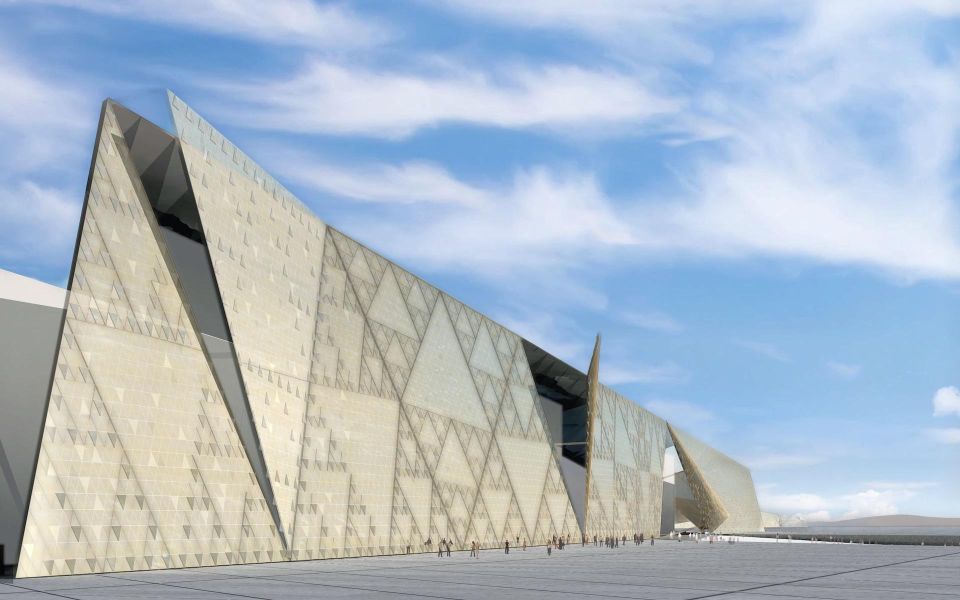
The design combines contemporary architecture with a setting shaped by the nearby Giza Pyramids. The building incorporates angular geometry, expansive exhibition areas, natural light, and carefully planned connections between indoor and outdoor spaces.
Its north and south walls align with the Great Pyramid of Khufu and the Pyramid of Menkaure, creating a visual relationship between the modern museum and the ancient monuments.
The facade incorporates stone, glass, and decorative elements inspired by Egyptian royal imagery and hieroglyphic traditions.
Inside, the Grand Hall accommodates monumental statues, while the Grand Staircase creates a dramatic transition toward the main exhibition galleries.
The architectural design also supports the practical requirements of a major archaeological museum, including visitor circulation, exhibition flexibility, artifact protection, and access to conservation facilities.
The result is a distinctive cultural building that connects modern design with the history of ancient Egypt.
The Grand Egyptian Museum Conservation Center
The Grand Egyptian Museum complex includes a conservation and restoration center dedicated to the scientific study and preservation of Egyptian antiquities.
Established in 2006 and opened in 2010, the center supports the restoration, documentation, and long-term protection of archaeological objects.
The facility contains 19 laboratories specializing in materials such as mummies, wood, stone, wall paintings, and metals. Other laboratories focus on preventive conservation and scientific documentation, while six storage rooms provide controlled environmental conditions.
The conservation center helps prepare artifacts for exhibition and protects objects that may be sensitive to temperature, humidity, light, and handling.Grand Egyptian Museum: Complete Guide to Egypt’s GEM 2026.
Its work demonstrates that the Grand Egyptian Museum is not simply a tourist attraction. It is also an important institution for archaeological research, conservation, and professional training.
Grand Egyptian Museum Visitor Guide
A visit to the Grand Egyptian Museum provides an opportunity to explore ancient Egyptian history in a modern exhibition environment.
Visitors can begin in the Grand Hall, where the monumental statue of Ramesses II introduces the museum’s collections. The Grand Staircase then leads toward the main galleries, where artifacts illustrate the development of Egyptian civilization.
The Tutankhamun galleries are a major highlight, while the Khufu Ships Museum provides a different perspective on ancient Egyptian engineering and religious traditions.
Because the Grand Egyptian Museum contains a very large collection, visitors should plan their time according to their interests. Those who want to explore several galleries, study the Tutankhamun collection, and visit additional exhibitions should allow sufficient time.
A guided Grand Egyptian Museum tour can help visitors understand the historical context of the artifacts and organize their visit around the most important collections.
Before visiting, check current opening hours, ticket prices, available galleries, and access restrictions through official visitor information channels, as these details may change.
Can You Visit the Grand Egyptian Museum and Giza Pyramids on the Same Day?
Yes. The Grand Egyptian Museum is located close to the Giza Pyramid Complex, making it practical to visit both attractions on the same day.
A combined Grand Egyptian Museum and Giza Pyramids tour allows visitors to explore ancient Egyptian artifacts inside the museum and then see the monumental pyramids and surrounding archaeological sites.Grand Egyptian Museum: Complete Guide to Egypt’s Most Incredible Ancient Egyptian Treasures.
The museum focuses on royal collections, religious objects, artistic traditions, and everyday life, while the Giza Plateau provides direct access to the architecture associated with the Old Kingdom.
A possible sightseeing itinerary includes:
Morning: Giza Pyramids
Explore the Great Pyramid of Khufu, the pyramids of Khafre and Menkaure, and the Great Sphinx, depending on your interests and available time.
Afternoon: Grand Egyptian Museum
Visit the Grand Hall, Grand Staircase, permanent galleries, and Tutankhamun collection.
Additional activities
Depending on your schedule, you may include lunch or other nearby attractions.
The best order for visiting the Grand Egyptian Museum and Giza Pyramids depends on ticket availability, opening hours, traffic, and the amount of time you want to spend at each site.
For travelers with limited time in Cairo, a private guided tour can help coordinate transportation and create a more efficient sightseeing itinerary.Grand Egyptian Museum: Complete Guide to Egypt’s GEM 2026.
Why Include the Grand Egyptian Museum in Your Egypt Tour?
The Grand Egyptian Museum is an excellent addition to an Egypt travel itinerary because it provides historical context for the country’s most famous archaeological sites.
Visitors planning to explore Giza, Saqqara, Luxor, the Valley of the Kings, and other historical destinations can use the museum’s collections to understand ancient Egyptian religious beliefs, royal traditions, artistic techniques, and material culture.
The Tutankhamun collection provides an opportunity to discover one of the world’s most famous archaeological discoveries, while the Khufu Ships Museum highlights ancient engineering and religious traditions.
The Grand Egyptian Museum’s location near the Giza Pyramids also makes it convenient to include in Cairo sightseeing tours.
Whether you are interested in archaeology, ancient history, cultural photography, or family travel, the Grand Egyptian Museum offers a valuable introduction to Egypt’s cultural heritage.
Frequently Asked Questions About the Grand Egyptian Museum
1. What is the Grand Egyptian Museum?
The Grand Egyptian Museum is a major archaeological museum in Giza, Egypt, dedicated to ancient Egyptian civilization. It houses more than 100,000 artifacts and includes permanent galleries, the Tutankhamun collection, the Khufu Ships Museum, and conservation facilities.
2. Where is the Grand Egyptian Museum located?
The Grand Egyptian Museum is located in Giza, approximately 2 kilometers from the Giza Pyramid Complex. Visitors can combine a museum visit with a tour of the Great Pyramids and the Great Sphinx.
3. When did the Grand Egyptian Museum open?
The Grand Egyptian Museum officially opened on November 1, 2025, following years of planning, construction, artifact preparation, and trial operations.
4. How many artifacts are in the Grand Egyptian Museum?
The Grand Egyptian Museum has a collection of more than 100,000 artifacts. Its 12 main permanent galleries display more than 24,000 objects, alongside additional exhibition areas.
5. What is the most famous attraction at the Grand Egyptian Museum?
The Tutankhamun collection is one of the museum’s principal attractions. It includes 5,398 artifacts, including the famous golden mask, coffins, jewelry, furniture, and funerary objects.
6. Is Tutankhamun’s mummy displayed at the Grand Egyptian Museum?
No. Tutankhamun’s mummy remains in his tomb in the Valley of the Kings in Luxor. The Grand Egyptian Museum displays his extensive collection of burial treasures.
7. Can you visit the Grand Egyptian Museum and the pyramids together?
Yes. Their proximity makes it practical to visit the Grand Egyptian Museum and Giza Pyramids on the same day. The time required depends on the galleries and archaeological sites you want to explore.
8. Is the Grand Egyptian Museum suitable for children?
The museum complex includes a children’s museum designed for children aged 6 to 12, featuring interactive educational activities and hands-on learning experiences. Check current availability before planning a family visit.
9. How much time should you spend at the Grand Egyptian Museum?
The time needed depends on your interests and the exhibitions available. Visitors who want to explore the main galleries, Tutankhamun collection, and other attractions should allow sufficient time rather than treating the museum as a brief stop.
10. Why is the Grand Egyptian Museum important to Egyptian tourism?
The Grand Egyptian Museum supports cultural tourism by combining a major archaeological collection with modern exhibition spaces, conservation facilities, and educational resources. Its location near the Giza Pyramids makes it an important destination for Cairo sightseeing tours.
Conclusion: Visit the Grand Egyptian Museum in Giza, Egypt
The Grand Egyptian Museum is one of Egypt’s most important cultural destinations, offering an extensive journey through the history, achievements, and traditions of ancient Egyptian civilization.
From the monumental statue of Ramesses II in the Grand Hall to the archaeological treasures displayed throughout the permanent galleries, the Grand Egyptian Museum provides visitors with an exceptional opportunity to discover Egypt’s past.
The Tutankhamun collection, featuring 5,398 artifacts, is one of the museum’s most significant highlights. The Khufu Ships Museum, Grand Staircase, and conservation center further demonstrate the importance of the Grand Egyptian Museum as a center for tourism, education, and archaeological preservation.Grand Egyptian Museum: Complete Guide to Egypt’s GEM 2026.
Located near the Giza Pyramids, the Grand Egyptian Museum is an essential destination for travelers planning a cultural tour of Cairo. Combining the museum with a visit to the Great Pyramids allows visitors to explore both the artifacts of ancient Egypt and the monumental architecture that made the civilization famous.Grand Egyptian Museum: Complete Guide to Egypt’s Most Incredible Ancient Egyptian Treasures.
If you are planning a trip to Egypt, include the Grand Egyptian Museum in your itinerary to discover the treasures, beliefs, and achievements that continue to make ancient Egyptian civilization fascinating to people around the world.