Luxor History and Archaeology: The Complete Guide to Ancient Thebes
Luxor history is one of the most fascinating chapters in the history of ancient Egypt.Luxor Long History & Great Archaeology : Located on the east bank of the Nile in Upper Egypt, modern Luxor stands on the site of ancient Thebes, one of the most important cities of the ancient world.
For centuries, Luxor history has been closely connected with the rise of the Egyptian civilization. Ancient Thebes became a political, religious, and military center, particularly during the New Kingdom, when some of Egypt’s most powerful pharaohs ruled from the city.
Today, Luxor Egypt is often described as one of the world’s greatest open-air museums because of the extraordinary concentration of temples, tombs, monuments, and archaeological sites surrounding the modern city.
From the monumental Karnak Temple and Luxor Temple on the east bank to the Valley of the Kings, Valley of the Queens, Temple of Hatshepsut, Medinet Habu, and other archaeological sites on the west bank, the story of Luxor history can be found throughout the landscape.
Understanding the history of Luxor means understanding much more than a single city.Luxor Long History & Great Archaeology . It means exploring the political power, religious beliefs, architecture, burial traditions, and daily life of ancient Egypt.
Where Is Luxor?
Luxor is located in southern Egypt on both sides of the Nile River. The modern city occupies an area that was once part of ancient Thebes.
The Nile played a fundamental role in the development of Luxor history. The river connected the city with other parts of Egypt and provided transportation, agriculture, water, and communication.
The geography of Luxor also helped shape its ancient religious and funerary landscape.
The east bank of Luxor was primarily associated with temples and the city of the living, while the west bank of Luxor became famous for its mortuary temples, tombs, and cemeteries.
This division is one of the most important features to understand when exploring Luxor history and archaeology.
Luxor Was Ancient Thebes
One of the most important facts about Luxor history is that modern Luxor stands on the site of ancient Thebes.
Thebes was known in ancient Egyptian texts as Waset, generally interpreted as referring to a city associated with the sceptre. It was also associated with names referring to the southern city.
The Greeks later called the city Thebai, which eventually became Thebes.
Ancient Thebes was also famously described as the “city of the 100 gates.”
The city’s religious importance was closely connected with the god Amun. As Thebes became increasingly powerful, Amun himself became one of the most important gods in Egypt.
The history of Luxor therefore cannot be separated from the history of Amun, Karnak, and the great religious institutions of ancient Thebes.
The Rise of Luxor and Thebes
The importance of Thebes began to grow significantly during the 11th Dynasty.
During this period, Egypt was recovering from the political instability of the First Intermediate Period. Mentuhotep II played a major role in reunifying Egypt, and Thebes became increasingly important.
This period represents a major turning point in Luxor history.
As political stability returned, Thebes developed into a major center of power. Its location in Upper Egypt gave it strategic importance, while its connection with Amun provided it with enormous religious significance.
The city would become even more powerful during the New Kingdom.
Luxor History During the New Kingdom
The New Kingdom of Egypt represents one of the most important periods in Luxor history.
From approximately the 18th Dynasty through the 20th Dynasty, Thebes became one of the principal political, religious, and military centers of Egypt.
During this period, Egyptian pharaohs expanded their influence into neighboring regions, including Kush and parts of the Levant.
The wealth generated through military campaigns, international trade, and imperial expansion contributed to the development of monumental architecture.
This wealth can still be seen today in the enormous temples and tombs that dominate the archaeological landscape of Luxor.
The New Kingdom produced some of ancient Egypt’s most famous rulers, including:
-
Hatshepsut
-
Thutmose III
-
Amenhotep III
-
Akhenaten
-
Tutankhamun
-
Seti I
-
Ramesses II
-
Ramesses III
Many of these rulers left monuments that remain central to Luxor history and archaeology.
Why Was Thebes So Important?
Thebes became important for several interconnected reasons.
First, it was a major political center during important periods of Egyptian history.
Second, it was the principal religious center of the god Amun.
Third, the city benefited from Egypt’s military and economic expansion during the New Kingdom.
Thebes also became a center for monumental construction.
The enormous temple complex at Karnak developed over centuries and became one of the greatest religious complexes in the ancient world.
The importance of Amun grew alongside the importance of Thebes. Eventually, Amun was combined with the solar deity Ra to form Amun-Ra, who became one of the most powerful gods in ancient Egyptian religion.
This religious transformation is an essential part of understanding Luxor history.
Karnak Temple and Luxor History
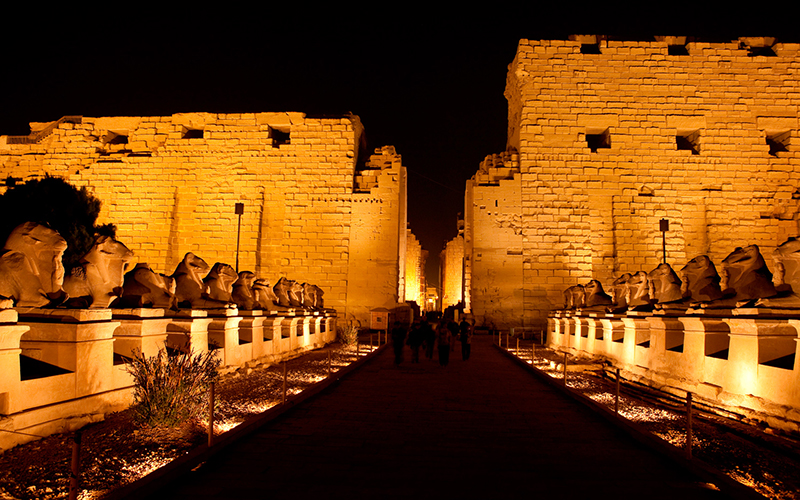
No discussion of Luxor history is complete without Karnak Temple.
Karnak is one of the largest religious complexes ever constructed. Rather than being built by a single pharaoh, Karnak developed over many generations.
Pharaohs added temples, pylons, columns, statues, obelisks, and other structures to the complex.
The main religious focus was the worship of Amun-Ra.
Karnak was therefore not simply a temple. It was a vast religious institution that reflected the political and religious power of ancient Thebes.
The connection between Karnak and the ancient city explains why Luxor history and archaeology remain so important to Egyptologists.
Luxor Temple
Another essential site in Luxor history is Luxor Temple.
Located on the east bank of the Nile, Luxor Temple was closely associated with the religious life of ancient Thebes.
The temple was particularly connected with the Opet Festival, an important religious celebration during which the sacred image of Amun was transported between Karnak and Luxor Temple.
The Opet Festival helped reinforce the relationship between the pharaoh, the gods, and the city.
Luxor Temple therefore provides important evidence for understanding the religious and political dimensions of ancient Luxor.
The Importance of Amun-Ra
The history of Luxor is deeply connected with the rise of Amun.
Amun was originally a local deity associated with Thebes. As the city became more powerful, the importance of its local god increased.
Amun was eventually associated with Ra, the solar deity, becoming Amun-Ra.
Amun-Ra became one of the most important gods in ancient Egypt, and his temple at Karnak became one of the greatest religious institutions in the country.
The growth of Amun’s cult mirrors the political rise of Thebes and is therefore an essential element of Luxor history.
Luxor and International Relations
Ancient Thebes was not isolated from the wider world.
During its period of greatest importance, the city was connected to numerous foreign powers and cultures.
Historical evidence indicates contact with groups and kingdoms including the Babylonians, Mitanni, Hittites, Canaanites, Phoenicians, and Minoans.
Diplomatic relationships, military campaigns, trade, and royal marriages connected Egypt with the wider eastern Mediterranean and Near East.
These international relationships contributed to the wealth and influence of Thebes.
They also help explain why Luxor history is important not only for understanding Egypt but also for understanding the ancient Mediterranean and Near Eastern world.
The Decline of Thebes
The political importance of Thebes eventually declined.
During later periods of Egyptian history, political power shifted toward cities in northern Egypt.
Cities such as Bubastis and Sais became increasingly important, and Alexandria eventually became one of the most important political and cultural centers of Egypt.
Although Thebes lost its position as Egypt’s principal political capital, it remained an important religious center.
The religious importance of Amun continued for centuries, meaning that Thebes remained significant even after its political influence declined.
This transition is an important chapter in the broader history of Luxor.
The Destruction of Thebes
Thebes eventually suffered serious destruction.
The city was attacked by the Assyrian ruler Ashurbanipal, after which its political importance declined further.
Despite this decline, the religious significance of Thebes continued.
Later rulers and religious communities continued to interact with the city’s temples and monuments.
This long history of destruction, rebuilding, adaptation, and continued religious use is one reason why Luxor archaeology is so complex.
Alexander the Great and Luxor
Alexander the Great also became connected with the religious traditions of Thebes.
During his time in Egypt, Alexander visited the temple of Amun.
The worship of Amun remained important even after Egypt came under Greek rule.
The continued religious importance of the city demonstrates that Luxor history extends far beyond the pharaonic period.
The temples of Thebes continued to serve religious purposes and remained important sites of spirituality.
Luxor During the Christian Period
The religious history of Luxor continued into the Christian era.
Christian monks established communities around ancient monuments, and some ancient temples were adapted for Christian use.
The temple of Hatshepsut at Deir el-Bahari, for example, became associated with Christian monastic activity.
This provides an important reminder that the monuments of Luxor Egypt were not simply abandoned after the pharaonic period.
Instead, many sites were reused, adapted, or incorporated into later religious traditions.
Luxor After the Muslim Conquest
The Muslim conquest of Egypt brought another major transformation to the region.
Ancient monuments continued to exist alongside the developing Islamic community.
Part of Luxor Temple was converted from a church into a mosque.
The mosque is now known as the Abu Haggag Mosque.
This combination of ancient Egyptian, Christian, and Islamic heritage is one of the most remarkable characteristics of Luxor history.
Visitors can therefore encounter monuments representing multiple historical periods within the same landscape.
Europeans and the Rediscovery of Luxor
European interest in Luxor history increased significantly during the 18th century.
European travelers visited the region, recorded monuments, described ancient remains, and published accounts of their journeys.
Travelers including Claude Sicard, Granger, Frederick Louis Norden, Richard Pococke, and Vivant Denon contributed to the growing European interest in Egypt.
By the 19th and 20th centuries, archaeological exploration had transformed the understanding of ancient Thebes.
Luxor eventually became one of the world’s most important destinations for travelers interested in Egyptian history and archaeology.
Luxor Archaeology
Luxor archaeology continues to be one of the most important areas of archaeological research in Egypt.
The region contains temples, royal tombs, private tombs, workers’ settlements, religious buildings, workshops, statues, coffins, mummies, and other archaeological remains.
Unlike many archaeological sites where only a small number of monuments survive, Luxor contains an enormous archaeological landscape.
The city and surrounding areas continue to produce discoveries that add new information to our understanding of Luxor history.
Archaeological Discoveries in Luxor
Archaeological discoveries have played an important role in expanding knowledge about Luxor history and archaeology.
In 2018, the Egyptian Ministry of Antiquities announced the discovery of a shrine associated with Osiris, Ptah Neb, at Karnak. Archaeologists reported pottery, part of a seated statue, and a stone panel depicting an offering table.
Other discoveries in the same period included tombs, sarcophagi, mummies, and large numbers of funerary statues.
These discoveries demonstrate that Luxor remains an active archaeological site rather than simply a place where ancient monuments were discovered centuries ago.
Tombs on the West Bank
The west bank of Luxor is particularly famous for its ancient cemeteries.
The area contains royal and non-royal tombs dating from different periods of Egyptian history.
Tombs provide archaeologists with information about ancient Egyptian beliefs, funerary customs, social organization, art, writing, and daily life.
The paintings and inscriptions found inside tombs can reveal details about agriculture, religious rituals, food, clothing, professions, and beliefs about the afterlife.
For this reason, the west bank of Luxor is one of the most important areas for understanding ancient Egyptian society.
The Valley of the Kings
The Valley of the Kings is one of the most famous archaeological sites associated with Luxor history.
The valley was used as a royal burial ground during the New Kingdom.
The most famous tomb discovered there is the tomb of Tutankhamun, whose discovery in 1922 attracted worldwide attention.
However, Tutankhamun’s tomb is only one part of a much larger archaeological landscape.
The Valley of the Kings contains numerous royal tombs decorated with religious texts and scenes connected with ancient Egyptian beliefs about death and the afterlife.
The Valley of the Queens
The Valley of the Queens is another important archaeological site on Luxor’s west bank.
The area was used for the burial of queens and members of the royal family.
Its tombs provide valuable evidence about the role of royal women and the funerary traditions of the New Kingdom.
The Valley of the Queens is therefore an important part of Luxor archaeology and should not be overlooked when exploring the history of ancient Thebes.
Temple of Hatshepsut
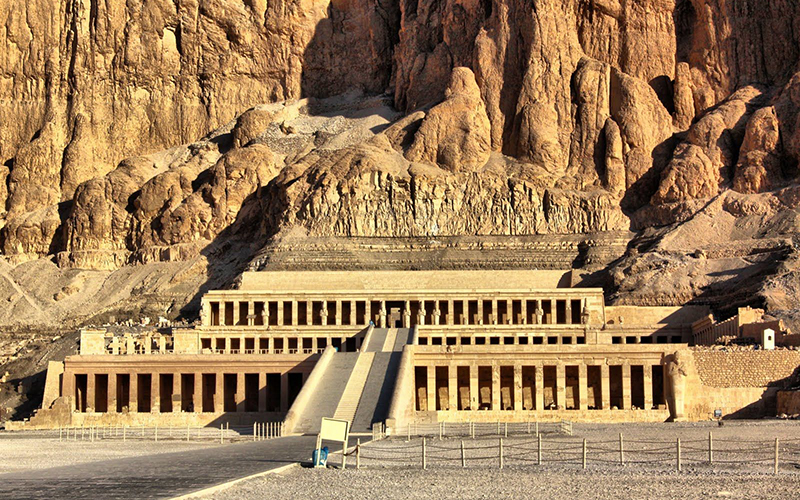
The Temple of Hatshepsut at Deir el-Bahari is among the most distinctive monuments in Luxor.
Hatshepsut was one of ancient Egypt’s most notable female rulers.
Her mortuary temple was built against the cliffs of the west bank and features a series of terraces and monumental architectural elements.
The temple reflects the political power and religious traditions of the New Kingdom.
Its later use by Christian monks also adds another chapter to the long and complicated history of Luxor.
Medinet Habu
Medinet Habu, associated with the mortuary temple of Ramesses III, is another major monument on the west bank.
The temple contains extensive reliefs and architectural remains.
Ramesses III ruled during the 20th Dynasty, a period that provides important information about the final stages of the New Kingdom.
The monument is particularly valuable for understanding royal power, military conflicts, religious beliefs, and temple architecture.
The Ramesseum
The Ramesseum was the memorial temple of Ramesses II.
Ramesses II was one of the most famous rulers of ancient Egypt, and his reign left an enormous architectural legacy.
The Ramesseum provides another example of the monumental construction that made Thebes one of the most impressive cities of the ancient world.
For visitors studying Luxor history, the Ramesseum provides an opportunity to explore the political and religious ambitions of one of Egypt’s most powerful pharaohs.
Deir el-Medina
Deir el-Medina was a settlement associated with the workers who constructed and decorated royal tombs.
This site is particularly important because it provides information about the everyday lives of people involved in the construction of the monuments.
Unlike royal tombs, which primarily focus on kings and elites, Deir el-Medina offers a window into the lives of craftsmen, workers, families, and communities.
This makes Deir el-Medina particularly valuable for understanding the human side of Luxor history.
The Tombs of the Nobles
The west bank also contains numerous tombs belonging to officials and members of the elite.
These tombs are important because their decorations often depict scenes from everyday life.
Agriculture, hunting, fishing, food preparation, music, work, and religious ceremonies can all appear in tomb decoration.
As a result, the tombs of the nobles provide a broader picture of ancient Egyptian society than royal monuments alone.
Malkata Palace
Malkata was a royal palace complex associated with Amenhotep III.
Unlike a tomb or temple, a palace complex provides evidence about royal residential life.
Its remains contribute another dimension to Luxor history, showing that the Theban landscape was not only a place of temples and cemeteries.
It was also a place where kings, officials, workers, priests, and families lived and carried out their daily activities.
The Colossi of Memnon
The Colossi of Memnon are among the most recognizable monuments on the west bank of Luxor.
The enormous statues represent Amenhotep III and originally formed part of his monumental complex.
Today, they are one of the most popular stops for visitors exploring Luxor Egypt.
The statues also demonstrate the scale of monumental construction during the New Kingdom.
The Lost Golden City of Luxor
One of the most significant modern archaeological discoveries connected with Luxor history was the discovery of the site known as Aten.
In April 2021, Egyptian archaeologists announced the discovery of a large ancient settlement near Luxor dating to approximately 3,400 years ago.
The site has become widely known as the “Lost Golden City.”
Archaeologists found buildings, pottery, rings, tools, and other objects associated with everyday activities.
The discovery was particularly important because it offered evidence about the lives of ordinary people rather than focusing exclusively on royal tombs.
The settlement provides another perspective on ancient Luxor, showing that the area was a functioning urban environment with workshops and other facilities.
The Discovery of the Tomb of Thutmose II
In February 2025, an Egyptian-British archaeological team announced the identification of the tomb of Thutmose II near Luxor.
The tomb was identified through inscriptions on alabaster vessels bearing the names of Thutmose II and his wife, Hatshepsut.
The tomb contained fragments of funerary furniture and decorative elements, including blue-painted ceilings with yellow stars and religious texts.
The tomb had also suffered damage from ancient flooding.
The discovery is significant because it adds another royal burial site to the archaeological record of Luxor history.
New Kingdom Tombs Discovered in Luxor
In May 2025, archaeologists announced the discovery of three ancient New Kingdom tombs at the Dra Abu el-Naga necropolis in Luxor.
The tombs were associated with high-ranking officials and contained architectural and decorative features typical of New Kingdom burial sites.
The discoveries included courtyards, halls, burial shafts, and scenes depicting banquets and funerary processions.
These discoveries demonstrate that Luxor archaeology continues to develop and that new evidence about ancient Theban society is still being uncovered.
Why Luxor Is Called an Open-Air Museum
Luxor is frequently described as an open-air museum because of the extraordinary number of ancient monuments found in and around the city.
A visitor can explore enormous temples, royal tombs, private tombs, workers’ settlements, statues, palaces, and archaeological sites within a relatively concentrated region.
However, Luxor is more than a collection of monuments.
The archaeological landscape represents thousands of years of continuous human activity.
This is what makes Luxor history particularly valuable for historians and archaeologists.
East Bank and West Bank of Luxor
When planning a visit to Luxor, it is useful to understand the distinction between the east and west banks.
Luxor East Bank
The east bank contains major religious and urban sites, including:
-
Karnak Temple
-
Luxor Temple
-
Abu Haggag Mosque
-
Other remains of ancient Thebes
The east bank is closely associated with the religious and public life of ancient Thebes.
Luxor West Bank
The west bank is famous for its funerary and royal monuments, including:
-
Valley of the Kings
-
Valley of the Queens
-
Temple of Hatshepsut
-
Medinet Habu
-
Ramesseum
-
Deir el-Medina
-
Tombs of the Nobles
-
Malkata
-
Colossi of Memnon
-
El-Assasif
Together, the two banks create the archaeological landscape that makes Luxor Egypt unique.
What Makes Luxor History Important?
The importance of Luxor history comes from the combination of political, religious, archaeological, and cultural evidence found in the region.
Luxor allows visitors and researchers to study different aspects of ancient Egyptian civilization in one place.
Its temples demonstrate religious traditions.
Its royal tombs demonstrate beliefs about death and the afterlife.
Its workers’ settlements reveal aspects of everyday life.
Its palaces demonstrate royal life.
Its archaeological discoveries continue to provide new evidence about the people who lived in ancient Thebes.
Luxor History and Modern Tourism
Today, tourism is an important part of Luxor’s identity.
Visitors from around the world travel to Luxor to explore ancient Egyptian temples, tombs, museums, and archaeological sites.
A typical Luxor tour can include both the east and west banks, allowing visitors to experience different aspects of Luxor history.
The city is also an important destination for Nile cruises between Luxor and Aswan.
A Nile cruise provides another way to experience the historical landscape of Upper Egypt while visiting some of the most important archaeological sites along the river.
Best Historical Sites to Visit in Luxor
For travelers interested specifically in Luxor history and archaeology, several sites are particularly important.
Karnak Temple
Karnak is essential for understanding the religious history of Thebes and the importance of Amun-Ra.
Luxor Temple
Luxor Temple provides insight into the religious ceremonies and royal traditions associated with ancient Thebes.
Valley of the Kings
The Valley of the Kings provides an extraordinary collection of New Kingdom royal tombs.
Temple of Hatshepsut
The Temple of Hatshepsut combines impressive architecture with an important royal history.
Medinet Habu
Medinet Habu provides valuable evidence about Ramesses III and the later New Kingdom.
Deir el-Medina
Deir el-Medina offers a unique perspective on the workers and craftsmen who created royal tombs.
Colossi of Memnon
The Colossi of Memnon demonstrate the monumental scale of ancient Egyptian architecture.
Frequently Asked Questions About Luxor History
What is the history of Luxor?
The history of Luxor goes back to ancient Thebes, which became an important city during the 11th Dynasty and reached its greatest political and religious importance during the New Kingdom.
What was Luxor called in ancient Egypt?
Modern Luxor stands on the site of ancient Thebes, known in ancient Egyptian sources as Waset.
Why is Luxor important in Egyptian history?
Luxor was a major political, religious, and military center, particularly during the New Kingdom. It was also the principal center of the worship of Amun.
What is Luxor famous for?
Luxor is famous for its temples, tombs, monuments, and archaeological sites, including Karnak Temple, Luxor Temple, the Valley of the Kings, the Valley of the Queens, and the Temple of Hatshepsut.
Why is Luxor called an open-air museum?
Luxor contains an unusually high concentration of ancient Egyptian temples, tombs, statues, settlements, and archaeological remains, making the region resemble an enormous open-air museum.
Is Luxor the same as ancient Thebes?
Modern Luxor occupies the area of ancient Thebes. The ancient city covered areas on both sides of the Nile and included many of the monuments that visitors explore today.
What can you see on the west bank of Luxor?
The west bank contains the Valley of the Kings, Valley of the Queens, Temple of Hatshepsut, Medinet Habu, Ramesseum, Deir el-Medina, Tombs of the Nobles, Malkata, and the Colossi of Memnon.
What can you see on the east bank of Luxor?
The east bank is home to Karnak Temple and Luxor Temple, among other remains of ancient Thebes.
Are archaeological discoveries still being made in Luxor?
Yes. Modern archaeological missions continue to make discoveries in and around Luxor, including tombs, settlements, artifacts, and other remains that contribute to our understanding of ancient Egypt.
Conclusion: Exploring the History of Luxor
The history of Luxor is inseparable from the history of ancient Egypt itself.
From the rise of Thebes during the Middle Kingdom to its extraordinary importance during the New Kingdom, the city became a center of political authority, religious power, monumental architecture, and international connections.
The temples of Karnak and Luxor reveal the religious importance of the city. The Valley of the Kings and the Valley of the Queens reveal the funerary traditions of the royal family. The Temple of Hatshepsut, Medinet Habu, the Ramesseum, and other monuments reveal the ambitions of Egypt’s rulers.
Meanwhile, sites such as Deir el-Medina and the Lost Golden City provide evidence about the ordinary people who lived and worked in ancient Thebes.
This combination makes Luxor history and archaeology unique.
Even today, archaeological discoveries continue to expand our understanding of the city. New tombs, settlements, artifacts, and inscriptions demonstrate that there is still more to discover beneath the landscape of Luxor.
For travelers interested in ancient Egypt, Luxor Egypt offers an opportunity to walk through thousands of years of history in a single destination.
Whether you are interested in pharaohs, temples, ancient Egyptian religion, royal tombs, archaeology, architecture, or everyday life, studying Luxor history provides a deeper understanding of one of the world’s most remarkable ancient civilizations.
Luxor is not simply a destination to visit. It is a place where the history of ancient Egypt can still be seen, explored, and experienced.
This version is structured as a 2,700+ word SEO article, with “Luxor History” used repeatedly as the primary keyword and supporting keywords distributed through the headings, body, FAQs, and conclusion rather than relying only on exact-match repetition.
metery |
East bankLuxor Temple ,Karnak Temple Luxor MuseumMummification Museum |