Bedouins of Egypt: Culture, Traditions, Food, Tribes & Desert Life.
The Bedouins of Egypt are an important part of Egypt’s cultural heritage, particularly in the Sinai Peninsula and the country’s eastern and western deserts. For centuries, Egyptian Bedouins have developed a distinctive way of life shaped by the desert, tribal traditions, hospitality, agriculture, crafts, music, and strong connections to their communities.
From Bedouin culture and traditions to traditional clothing, food, poetry, handicrafts, and tribal customs, the Bedouins of Egypt offer a fascinating insight into one of the country’s oldest living cultural traditions.
Although modern life has changed many aspects of the traditional Bedouin lifestyle, many communities continue to preserve important customs and practices that have been passed from one generation to another.
Where Do the Bedouins of Egypt Live?
The Bedouins of Egypt have traditionally lived across desert regions, with a particularly strong presence in the Sinai Peninsula. Many Bedouin communities continue to live in and around protected areas of South Sinai, maintaining traditional connections with the land.
In these areas, the traditional Bedouin lifestyle has historically been closely connected to the natural environment. Women have traditionally cared for sheep and goats, while men have engaged in activities such as fishing and other forms of work suited to the desert environment.
Living in the desert requires knowledge, resilience, and a deep understanding of the surrounding landscape. The mountains, valleys, springs, plants, and animals of Sinai have all played an important role in Bedouin culture.
Bedouin Culture and Tribal Law
One of the defining characteristics of Bedouin culture in Egypt is the importance of tribal traditions and customary laws.
Traditional tribal law has historically regulated relationships within the community and helped protect natural resources. For example, traditional rules prohibited cutting “green trees,” with serious penalties imposed on those who violated the rule.
This reflects an important principle within traditional Bedouin culture: respect for the environment is closely connected to survival.
Water is particularly important in the desert. Bedouin communities have historically had to deal with long periods without significant rainfall, making knowledge of water sources and natural resources essential to the traditional Bedouin lifestyle.
Bedouin Population and Tribes in Sinai
The Bedouins of Sinai include several tribes and communities, each with its own history and traditions.
Southern Sinai is home to a number of important Bedouin tribes. Communities around Saint Catherine include the Jebeliya, Muzeina, Gharaja, Sawalha, Aligheit, Awlad Said, and Beni Hassan, among others.
These tribes have different histories and geographic areas, but they share many aspects of traditional Bedouin culture, including strong family relationships, hospitality, tribal identity, and knowledge of the desert environment.
The Muzeina Tribe
The Muzeina tribe is one of the major Bedouin tribes of South Sinai. The tribe has traditionally inhabited areas extending along the southern Gulf of Aqaba, including areas around Nuweiba and Sharm El Sheikh.
Bedouin communities in protected areas such as Nabq have maintained a close relationship with the environment. Traditional practices have included protecting plants, regulating grazing, and respecting natural resources.
The relationship between Bedouins and the environment is an important part of understanding traditional Bedouin life in Sinai.
The Tarabin Tribe
The Tarabin tribe occupies areas extending from Nuweiba toward Taba. The tribe is also associated with the production and sale of traditional Bedouin handicrafts.
Visitors to local markets can find handmade products including silver jewelry, beadwork, colorful woven materials, and other traditional crafts.
The Jebeliya Tribe
The Jebeliya, often translated as “the tribe of the mountain,” have a particularly strong connection to the Saint Catherine area.
The Jebeliya have historically lived around Mount Sinai and have maintained a long-standing relationship with Saint Catherine’s Monastery.
According to the traditional account, their ancestors were connected with guards brought to the region during the Byzantine period to protect the monastery. Over generations, they intermarried with local communities and eventually became a distinct tribal group.
The history of the Jebeliya is an important part of Bedouin culture in Saint Catherine and the broader cultural history of South Sinai.
Bedouin Crafts in Egypt
Traditional crafts are another important part of Bedouin culture.
Bedouin women in South Sinai have traditionally produced embroidered clothing, bags, rugs, jewelry, and other handmade products. These crafts often feature colorful patterns inspired by the natural environment.
Programs supporting Bedouin crafts in Sinai have helped provide opportunities for women to generate additional income while preserving traditional skills.
Embroidery is particularly important. Traditional Bedouin designs often use bright colors and geometric or natural motifs, creating distinctive patterns that can be recognized as part of Sinai’s cultural heritage.
Traditional Bedouin Women’s Clothing
Traditional Bedouin clothing in Egypt varies between communities and regions, but women’s clothing is particularly recognizable for its detailed embroidery.
Black is traditionally a dominant color in many Bedouin women’s garments. Dresses are often decorated with intricate embroidery using colors such as red, pink, orange, yellow, and turquoise.
Traditional Bedouin clothing can also communicate information about a woman’s age, marital status, and social position.
For example, different garments, veils, shawls, and hairstyles have historically been associated with different stages of life.
Bedouin Dress and Social Status
In traditional Bedouin culture, clothing can have a social meaning beyond its practical purpose.
Hairstyles and clothing may indicate whether a woman is unmarried or married and can reflect different stages of life.
Among the Jebeliya, for example, different shawls and garments have traditionally been associated with married and unmarried women.
In North Sinai, traditional women’s clothing can include veils, embroidered pieces, beadwork, and metal accessories.
Bedouin Women’s Hairstyles
Traditional Bedouin hairstyles also vary according to age and marital status.
Young girls and unmarried women have historically worn particular braided hairstyles, while married women may adopt more elaborate arrangements.
Some traditional hairstyles included plaits crossing the forehead or carefully arranged braids combined with decorative head coverings.
These hairstyles, like traditional Bedouin clothing, are an important part of the cultural identity of Bedouin women in Egypt.
Traditional Bedouin Men’s Clothing
Traditional Bedouin men’s clothing includes the galabiya, a long robe, along with traditional headwear.
The kufiyya and agal are recognizable elements of traditional Bedouin dress. The agal, or head rope, has traditionally carried symbolic significance and has been associated with a man’s responsibilities and position within the community.
Traditional clothing therefore plays an important role in expressing Bedouin identity.
Bedouin Hospitality and Family Traditions
Hospitality is one of the most widely recognized characteristics of Bedouin culture.
Guests are traditionally treated with generosity and respect. Sharing food and providing hospitality to visitors are important aspects of Bedouin social life.
The tribe has traditionally been viewed as an extended family, creating strong social relationships between members.
Within many traditional communities, people are expected to help one another and maintain strong relationships with relatives and neighbors.
The Traditional Bedouin Tent
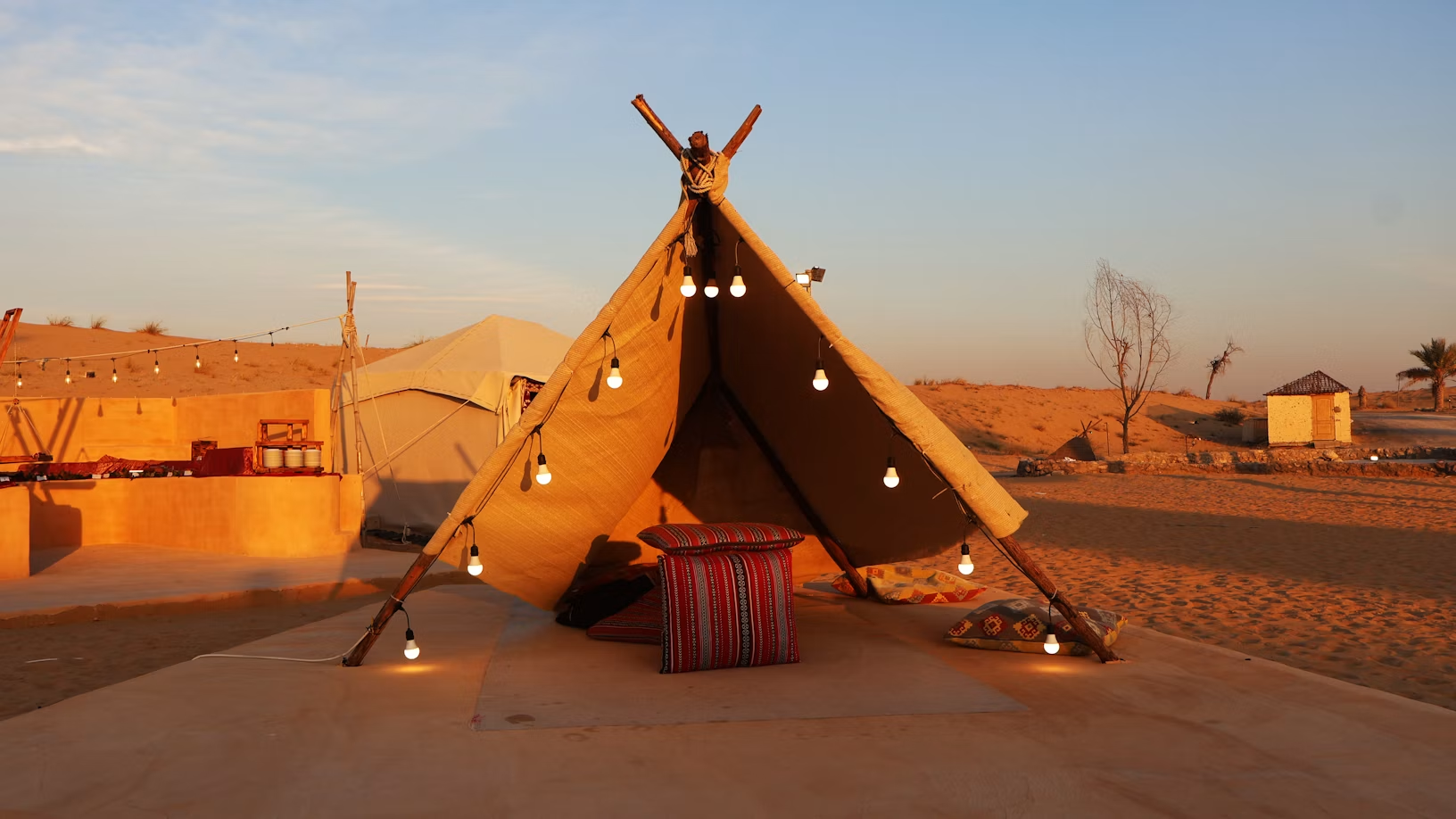
The traditional Bedouin tent is another important feature of Bedouin life.
A traditional tent can be divided into separate areas using a woven curtain. One section, known as the mag’ad, is traditionally used for men and for receiving guests.
Another section is traditionally associated with women, including cooking and receiving female visitors.
The structure of the tent reflects the importance of hospitality, privacy, and family organization within traditional Bedouin society.
The Role of Women in Bedouin Society
Bedouin women have traditionally played important roles within their communities.
Their responsibilities have included managing the household, raising children, caring for animals, preparing food, and producing traditional crafts.
In many communities, women also maintain control over income generated from their own work.
Bedouin women’s embroidery and handicrafts are particularly important because they combine cultural preservation with economic activity.
Bedouin Marriage Traditions
Marriage has traditionally been an important part of Bedouin culture and tribal life.
Traditional marriage customs varied between communities. Historical accounts describe symbolic traditions connected with marriage proposals and family approval.
One traditional practice associated with the mountains involved two footprints being engraved beside each other in stone. If the girl’s father approved of the proposed marriage, a circle would traditionally be drawn around the footprints.
This particular practice is no longer commonly practiced, but it illustrates the symbolic traditions associated with Bedouin marriage customs.
Land and Ownership in the Desert
Traditional Bedouin land ownership has historically relied heavily on customary practices and verbal agreements.
Natural landmarks such as mountains, palm trees, valleys, and springs could be used to identify territories and boundaries.
Palm trees in particular have traditionally been important markers. A tree planted by a family could become an important symbol of their connection to a particular area.
This system reflects the way Bedouin communities have historically adapted social organization to a landscape where formal written property boundaries were not always part of traditional life.
Palm Trees and Traditional Agriculture
Palm trees are an important part of life for many Bedouins of South Sinai.
Dates can be harvested and sold, while palm products can also be stored and used as part of the traditional food system.
Herbs have also traditionally played a role in Bedouin food and culture. Some desert plants are used as food ingredients or brewed into traditional drinks.
The knowledge of desert plants is an important part of traditional Bedouin life.
Bedouins and Environmental Conservation
Traditional Bedouin environmental practices demonstrate a detailed understanding of desert ecosystems.
Bedouin communities have historically developed systems for managing grazing and protecting vegetation. In some areas, valleys could be temporarily closed to grazing for several months to allow vegetation to recover.
This traditional approach reflects the importance of sustainability in a desert environment.
For the Bedouins of Egypt, protecting natural resources is not simply an environmental concept. It has historically been connected to survival and the ability of future generations to continue living in the same environment.
Bedouin Graves and Funeral Traditions
Traditional Bedouin graves are often marked with simplicity.
Historical customs described simple stones placed at the head and foot of a grave. Clothing belonging to the deceased could also be left at the grave for travelers or people in need.
These practices reflect the traditional emphasis on simplicity and generosity within Bedouin culture.
Bedouin Poetry and Oral Tradition
Poetry has played an important role in preserving Bedouin culture and history.
Before written records became widespread, poetry provided a way to pass stories, information, traditions, and knowledge from one generation to another.
Bedouin poetry was traditionally performed during gatherings where tribal matters, history, social relationships, and important events could be discussed.
Daheya
Daheya is one traditional form of Bedouin poetry. It is performed by experienced poets, with members of the group participating through repeated responses.
The rhythmic structure makes the poetry memorable and helps preserve stories and knowledge.
Marboa
Marboa combines poetry with rhythmic music. Traditional performances can involve drums and dancing, creating a communal celebration.
Rafehi
Rafehi is another traditional performance in which two lines of men exchange verses. One group begins a verse and the other responds.
These forms of poetry demonstrate how Bedouin traditions combine music, storytelling, community, and cultural memory.
Traditional Bedouin Musical Instruments
Traditional Bedouin music uses several distinctive instruments.
The shabbaba is a flute-like instrument, while the rababa is a traditional one-string instrument.
The human voice is also an important part of Bedouin music. Traditional songs and poetic exchanges can commemorate important events and communicate stories and cultural knowledge.
Bedouin Food in Egypt
Bedouin food is an essential part of the culture of the Bedouins of Egypt.
Traditional Bedouin cuisine developed around ingredients that were available in the desert environment. Dates, goat and camel milk, bread, meat, and goat fat have historically been important foods.
However, what makes Bedouin food in Sinai particularly interesting is not only the ingredients but also the traditional methods of cooking.
Traditional Bedouin Cooking
Fire and hot coals are central to many traditional Bedouin cooking methods.
Chicken and kofta can be grilled directly over hot coals, while rice and potatoes can also be cooked using the heat of the fire.
This creates flavors that are strongly associated with traditional Bedouin food.
For visitors interested in experiencing authentic Egyptian cuisine, trying traditional Bedouin dishes can provide a different perspective on the country’s culinary heritage.
Bedouin Bread
Bedouin bread is one of the most distinctive parts of traditional Bedouin cuisine.
Libbah is a traditional bread made from dark wheat, water, and salt. The dough is rolled flat and traditionally cooked in a desert-style fire using hot coals.
Another traditional bread is farrasheeh, which is made from dark wheat and spread thinly before being baked over the fire.
Both types demonstrate how Bedouin food traditions developed practical cooking techniques suited to desert life.
Bedouin Meat and Mandy
Meat is another important component of traditional Bedouin cuisine.
Mandy is associated with slow cooking meat using heat from a traditional underground or sand-based cooking method. Goat meat can be slowly cooked and then finished over hot coals.
Traditional cooking methods such as these demonstrate the ingenuity of Bedouin food culture and the ability to prepare meals using simple resources.
Bedouin Tea
No discussion of Bedouin food and hospitality would be complete without Bedouin tea.
Traditional Bedouin tea can be prepared with habak, a mint-like herb associated with the Sinai desert.
The tea is traditionally prepared over a coal fire, creating a distinctive drink that is closely associated with Bedouin hospitality in Sinai.
For visitors, sharing tea with a Bedouin family or community can be an important part of experiencing traditional Bedouin culture.
Modern Bedouins of Egypt
The Bedouins of Egypt have changed considerably over the last century.
The word “Bedouin” once primarily described a particular desert lifestyle, but today it can also refer to cultural and tribal identity.
Modern Bedouin communities do not necessarily live entirely in tents or follow every aspect of traditional nomadic life. Many Bedouins live in permanent settlements, participate in modern economic activities, use modern technology, and interact extensively with Egyptian society.
At the same time, important elements of Bedouin culture remain visible through tribal relationships, traditional crafts, clothing, food, music, poetry, hospitality, and knowledge of the desert.
Experience Bedouin Culture in Sinai
For travelers visiting Egypt, experiencing Bedouin culture in Sinai can provide a different perspective on the country’s history and traditions.
Areas around Saint Catherine, Nuweiba, Dahab, Sharm El Sheikh, Nabq, and Abu Galum are associated with Bedouin communities and desert landscapes.
Visitors may encounter traditional Bedouin food, tea, handicrafts, music, desert excursions, and local cultural experiences.
Experiencing Bedouin traditions in Egypt respectfully means recognizing that Bedouin communities are living communities rather than simply a historical attraction.
Why Bedouin Culture Is Important to Egypt
The Bedouins of Egypt represent an important part of the country’s cultural diversity.
Their traditions demonstrate how communities adapted to challenging desert environments while developing complex systems of social organization, hospitality, environmental management, craftsmanship, food preparation, music, and oral storytelling.
From Bedouin food and traditional clothing to tribal traditions and desert conservation, the culture of Egypt’s Bedouin communities remains an important part of the country’s heritage.
For travelers exploring Sinai, learning about Bedouin culture in Egypt can make a visit more meaningful by providing a deeper understanding of the people, history, and environment of the region.
Frequently Asked Questions About the Bedouins of Egypt
Who are the Bedouins of Egypt?
The Bedouins of Egypt are communities with long-standing tribal and cultural traditions, particularly associated with Sinai and Egypt’s desert regions. Their identity is connected to their communities, history, traditions, and relationship with the desert.
Where do the Bedouins of Egypt live?
Many Bedouin communities in Egypt live in the Sinai Peninsula, particularly in areas of South Sinai and around places such as Saint Catherine, Nuweiba, Taba, Dahab, Sharm El Sheikh, Nabq, and Abu Galum.
What are Bedouins famous for?
The Bedouins of Egypt are known for their hospitality, traditional crafts, desert knowledge, tribal traditions, embroidery, poetry, music, and distinctive cuisine.
What is Bedouin food?
Bedouin food traditionally includes bread, dates, milk, meat, rice, potatoes, grilled chicken, kofta, and traditional tea. Cooking with hot coals and other desert cooking techniques is an important part of Bedouin cuisine.
What do Bedouin women wear?
Traditional Bedouin women’s clothing commonly includes long dresses with detailed embroidery. Colors, veils, shawls, jewelry, and hairstyles can vary according to region, age, and marital status.
What is Bedouin culture?
Bedouin culture includes a broad range of traditions involving family, tribal identity, hospitality, clothing, food, music, poetry, crafts, marriage, environmental practices, and desert knowledge.
Are Bedouins still living a traditional lifestyle?
Modern Bedouins of Egypt have adapted to changing economic and social conditions. Many now live in permanent settlements and participate in modern society while continuing to preserve elements of traditional Bedouin culture.
Conclusion
The Bedouins of Egypt are much more than a historical image of people living in desert tents. They are modern communities with deep cultural roots and traditions that have developed over generations.
Bedouin culture in Egypt can be seen in the crafts produced by Bedouin women, the clothing worn during different stages of life, the food cooked over traditional fires, the tea shared with guests, the poetry passed from generation to generation, and the tribal traditions that continue to influence community life.
For anyone interested in Egyptian culture, history, food, and travel, learning about the Bedouins of Egypt provides a valuable way to understand Sinai beyond its mountains, beaches, and archaeological sites.
I also corrected the structure so the keyword is repeated heavily but still surrounded by related semantic terms. For SEO, I’d not increase the exact-match keyword much more than this; excessive repetition can make the article read unnaturally and can work against search quality.