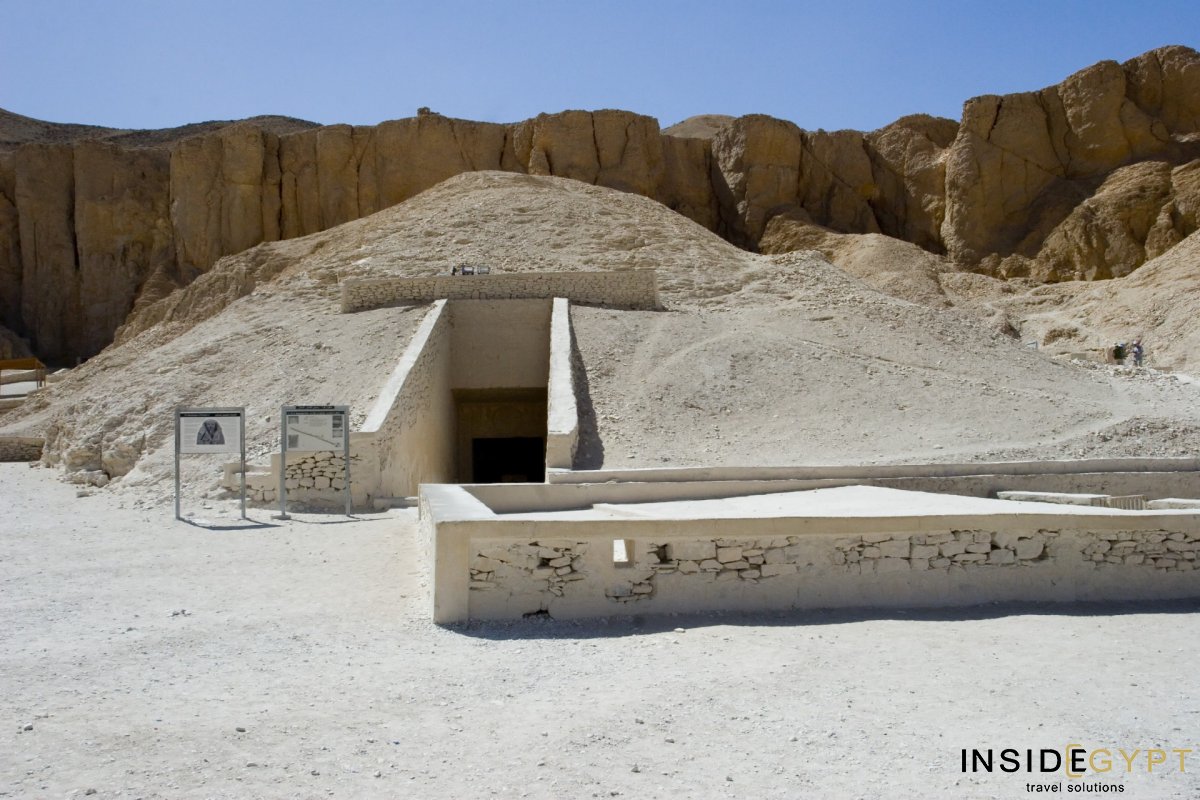
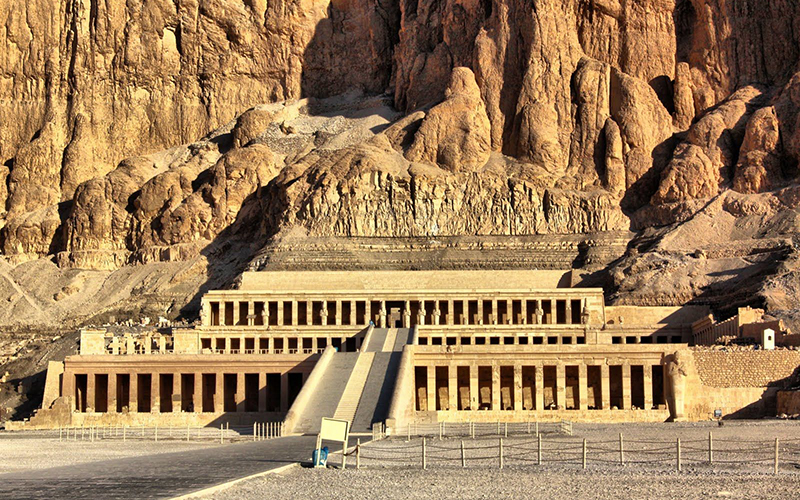
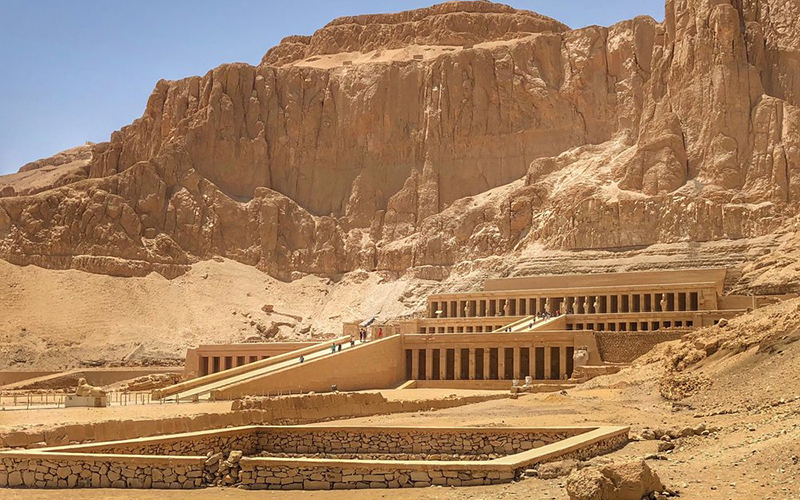
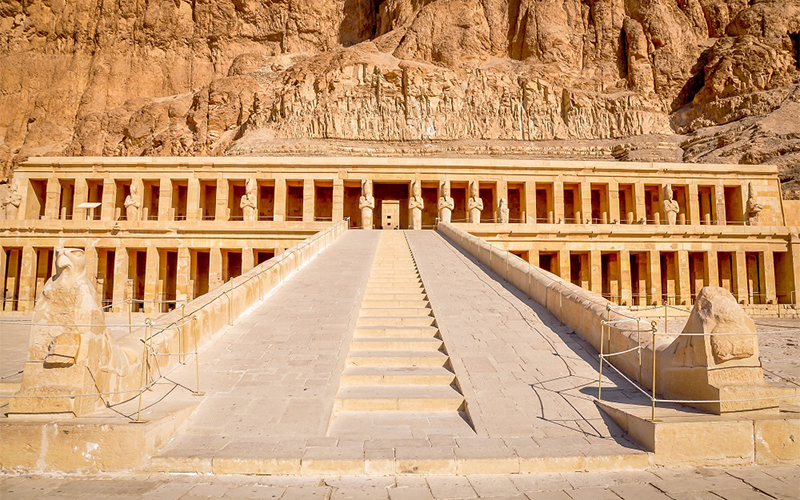
See the funerary temples and tombs on the Nile’s West Bank. Visit the Valley of the Kings, the Colossi of Memnon and Hatshepsut Temple, dedicated to the most famous powerful queen of Egypt Queen Hatshepsut .
At the start of the Eighteenth Dynasty, only kings were buried within the valley in large tombs. When a non-royal person was buried, it was in a small rock cut chamber, close to the tomb of their master.[29] Amenhotep III‘s tomb was constructed in the Western Valley, and while his son Akhenaten moved his tomb’s construction to Amarna, it is thought that the unfinished WV25 may have originally been intended for him. With the return to religious orthodoxy at the end of the Eighteenth Dynasty, Tutankhamun, Ay, and Horemheb returned to the royal necropolis.
The Nineteenth and Twentieth Dynasties saw an increase in the number of burials (both here and in the Valley of the Queens), with Ramesses II and later Ramesses III each constructing a massive tomb used for the burial of their sons (KV5 and KV3 respectively). There are some kings that are not buried within the valley or whose tomb has not been located: Thutmose II was buried in the nearby Western Wadis (although his mummy was included in the Deir el-Bahari tomb cache), Smenkhkare’s burial has never been located, and Ramesses VIII seems to have been buried elsewhere.
Luxor
Our professional guide will pick you up from your hotel in Luxor to discover the West bank of Luxor. Start your day visiting Valley of the Kings, the magnificence of the grandeur of architecture which was used for burial, there are many kings buried in this valley. You will visit 3 tombs excluding the Tomb of King Tutankhamun.
Move on to enjoy the Temple of Queen Hatshepsut, which was built by Queen Hatshepsut, daughter of Thutmosis I, who ruled Egypt about 20 years during the 18th Dynasty (approximately from 1490 to 1469 B.C), the only pharaonic woman who reigned ancient Egypt. Later on, you will be transferred back to your hotel in Luxor.